Delta Force Mission Secrecy Rule
Deception PointThe Delta Force Mission Secrecy Rule governs how covert Delta Force missions are controlled, concealed, and erased from institutional memory. Its stated logic is operational secrecy; its sharpest consequence is that secrecy can place immense authority in one controller’s hands while shielding actions from later scrutiny. The motto “Fly. Fight. Forget.” condenses that arrangement into three commands: execute the mission, then keep silent.
Command and Compartmentalization
Delta Force missions are described as so secret that they often bypass the traditional, multitiered chain of command. Instead, a single person may exercise “monocaput” management, controlling the unit as that person sees fit. The controller is generally a military or government powerbroker with enough rank or influence to run the operation. Authority is therefore concentrated rather than distributed through the usual hierarchy, while the mission’s classification restricts who can know about it.
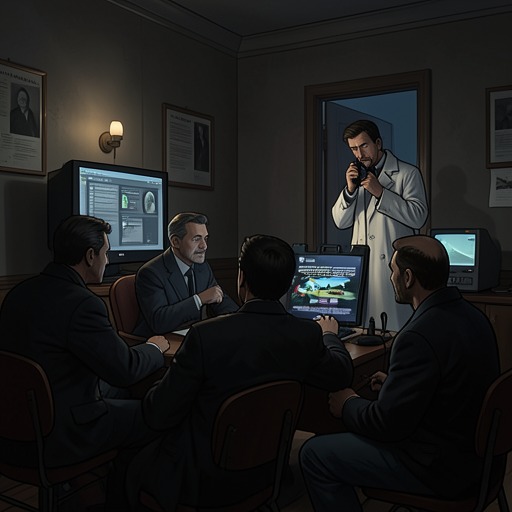
The secrecy begins before deployment. Delta-One’s team receives a faceless briefing in which every phase is conveyed through secure electronic channels, and Delta-One has never met the controller responsible for the mission. The arrangement keeps the human source of orders distant from the operators carrying them out. Delta-One’s later alert arrives through a CrypTalk device, reinforcing the story’s picture of command as a sequence of secure, controlled communications rather than an open chain of personal contact.
Silence as the Rule’s Final Stage
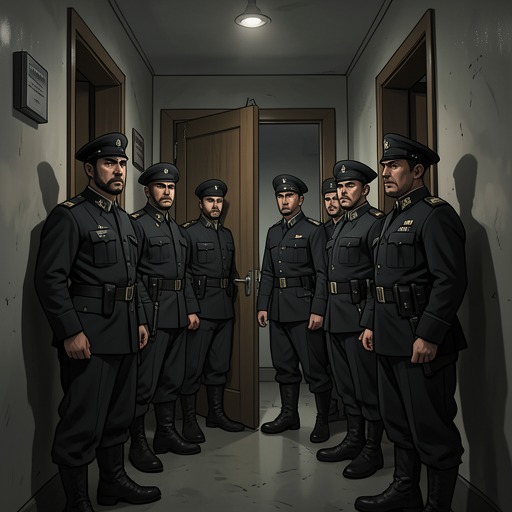
The doctrine does not end when an operation is complete. Delta Force missions are classified at the highest level, and soldiers are expected never to speak of them again—not to one another and not even to their commanding officers within Special Ops. The rule thus reaches beyond protecting information from outsiders: it also prevents ordinary internal discussion after the fact. Operational completion is followed by enforced silence, not by a visible process of shared review.
The motto “Fly. Fight. Forget.” expresses that sequence in unusually compressed form. “Forget” is not simply a claim that an operation should pass out of memory; in context, it names the required refusal to discuss it. The contrast between the ordinary language of military accountability and the rule’s demand for silence gives the doctrine its institutional force: a mission may have a controller and a classified purpose, but its execution is insulated from discussion among the people and superiors who might otherwise examine it.
The Delta Team and the Mission Above the Arctic
The team stationed above the Eighty-second Parallel is initially described as watching rather than flying or fighting. Even so, Delta-One recognizes the assignment as unusual and reflects on the breadth of operations in which he has served, including hostage rescues, counterterrorism work, and covert killings. That history establishes that the rule applies across missions with markedly different aims, rather than only to conventional combat.
On the current operation, the team is ordered to monitor a structure inside and out and report unexpected developments to its controller. The instruction makes observation and reporting the immediate task, but the controller remains the recipient of information and the center of authority. The team’s unusual assignment, faceless briefing, and restricted communications all demonstrate how the secrecy system shapes what its members know and how they act.
Consequences and Significance
The rule offers a practical mechanism for protecting highly classified operations: a small team receives instructions through secure channels, a powerful controller directs the mission, and the soldiers are bound to silence afterward. But the same design narrows the routes through which decisions can be questioned. When command is concentrated and post-mission discussion is forbidden, the doctrine can protect not only sensitive information but also the people and decisions behind an operation.
The novel’s wider events sharpen that implication. William Pickering’s account connects the meteorite deception to fear about NASA’s future and to covert intelligence work, while the Arctic assignment shows Delta operators acting under an unseen controller. Together, these details place the rule within a larger conflict between institutional protection and public accountability. Secrecy is not merely the backdrop to the operation: it is the system that determines who gives orders, who receives information, and who is allowed to speak afterward.